
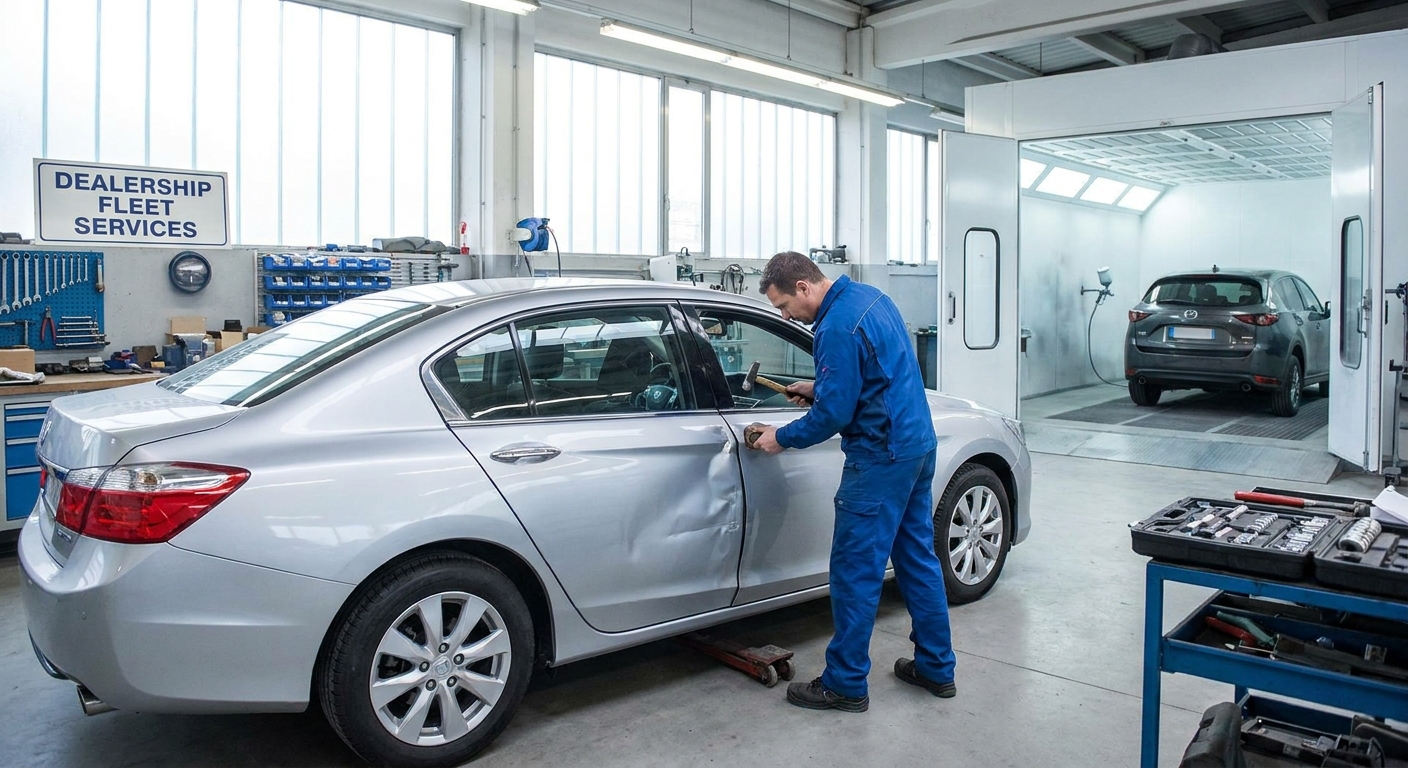
Panel Beating for Car Dealerships 2026: What to Buy
Dealership stock loses money every day it sits in the workshop instead of on the forecourt — panel beating for car dealerships in 2026 has to be judged on turnaround, colour accuracy and volume pricing, not just whether the dent comes out.
- Panel beating for car dealerships in 2026 needs a 48-72 hour turnaround or standing costs eat the resale margin — buy in on volume terms, not walk-in retail rates.
- Metalcross Vehicle Makeover Clinic’s colour matching process protects resale value on trade-in stock — check the match under daylight before you sign off, not under workshop lighting.
- Scratch and dent repair beats a full respray on cosmetic dings for dealer stock — reserve full paint jobs for structurally compromised panels only.
- Backyard panel beaters with no before-and-after documentation are a skip for dealership stock — you cannot defend resale value or disclosure without a paper trail.
Why this matters
A car sitting in a panel shop for two weeks instead of two days is a car not earning floor traffic. Dealers don't buy panel beating the way private owners do — they buy it against a clock, a margin, and a buyer who will run a finger over every panel gap before signing.
Get the vendor wrong and you're not just paying more per job. You're absorbing daily standing costs, risking a colour mismatch that kills a sale on the lot, and possibly handing a buyer a car with undisclosed prior damage that comes back as a warranty claim in 2026.
Who this is for
This guide is for dealership stock managers, forecourt teams, and dealer principals who move trade-ins, auction buys, and demo units through cosmetic repair before resale. If you're deciding between three quotes for a single scratch, this isn't your page — you need a vendor built for volume, fast sign-off, and repeatable colour matching across a rotating stock list, not a once-off repair shop.
What to look for in panel beating for car dealerships
Turnaround time against standing cost
Every day a vehicle sits in the shop is a day it's not generating margin on the lot. A shop that quotes 48 to 72 hours on a standard bumper or panel job is workable for dealer volume; a shop that can't commit to a timeline at quote stage is a red flag for your stock cycle in 2026.
Colour matching accuracy under real light
A mismatched panel on a used car reads as accident history to a buyer, whether or not that's true. Colour matching in panel beating has to hold up in daylight on the forecourt, not just under workshop fluorescents, because that's where your buyer inspects it.
Volume pricing and account terms
Retail per-job pricing doesn't scale across a stock list of ten or twenty vehicles a month. Look for a shop willing to quote on account terms or batch pricing — this is the single biggest lever on your cost per unit prepared for resale.
Cosmetic versus structural triage
Not every dent needs a full respray, and not every scuff is cosmetic. A shop that correctly separates a scratch-and-dent job from a structural repair saves you paying full-panel rates on a job that needed a spot repair.
Documentation for resale and compliance
Before-and-after photos and a written repair record protect you when a buyer or a finance house questions prior damage. Dealership stock carries a disclosure risk private repairs don't — get this in writing every time.
Warranty on the repair itself
A panel beater who won't stand behind their own paint or bodywork isn't someone you want touching stock you're about to sell with your dealership's name on the sale. A stated warranty on workmanship is non-negotiable for repeat business in 2026.
Top picks for dealership stock repair
Scratch and dent repair — the volume workhorse
Most forecourt damage is cosmetic: door dings, minor creases, trolley dents from transport. Scratch and dent repair for small business fleet vehicles is built for exactly this pattern — repeat volume, fast sign-off, minimal downtime. A typical dent repair without repaint runs a fraction of a full panel respray and turns around in a day or two. Buy for any dealer moving more than five units a month through cosmetic prep.
Bumper repair — the fast cosmetic fix
Bumpers take the brunt of parking-lot and transport damage on trade-in stock, especially on SUVs that sit higher and catch more scrapes. A cracked or scuffed bumper repaired and resprayed usually clears in under three working days when it's a plastic repair rather than a full replacement. Consider this your default for any SUV or crossover coming in with front or rear bumper cosmetic damage.
Headlamp restoration — the overlooked margin killer
Oxidised, cloudy headlamps make a car look years older than its actual mileage, and buyers notice before they even open the door. Restoration instead of full replacement saves significant cost per unit and takes hours, not days, making it one of the highest ROI cosmetic fixes on older trade-in stock. Buy for any vehicle over five years old with visible lamp haze.
Full respray and colour change — the resale value protector
When a panel is beyond spot repair or the whole vehicle needs a uniform finish after multiple cosmetic fixes, a full respray with accurate colour matching protects the sale price more than any single dent repair. This is a higher-cost, longer-turnaround job — budget more days, not hours. Consider it only when spot repair and colour blending won't hold up under forecourt lighting.
Hail damage repair — the seasonal spike service
Gauteng hail season brings a predictable spike in dent volume across dealer stock and trade-ins bought after a storm. A shop with dedicated hail damage capacity clears batches faster than a general panel shop working one car at a time. Buy in on a standing arrangement before the season, not after the first storm hits your stock list.
Get dealer volume pricing on panel work
Quote your stock list once — turnaround times and account terms for 2026.
What to avoid
- Uninsured backyard panel beaters with no paper trail. They're often cheaper per job, but if a buyer or finance house questions prior damage after the sale, you have nothing to show. That risk costs more than the saving.
- Retail per-job pricing with no volume terms. If a shop can't offer account pricing or batch turnaround for a stock list, your cost per unit prepared will stay flat no matter how many cars you send.
- Full respray as the default fix. Resprayed panels that didn't need it push turnaround out by days and cost multiples of a spot repair for no resale benefit over a correctly matched partial repair.
Verdict comparison across criteria
| Service type | Typical turnaround | Best for dealer stock | Verdict |
|---|---|---|---|
| Scratch and dent repair | 1-2 days | High-volume cosmetic dings | Buy |
| Bumper repair | 2-3 days | SUVs, transport damage | Consider |
| Headlamp restoration | Same day to 1 day | Vehicles 5+ years old | Buy |
| Full respray / colour match | 4-7 days | Panel beyond spot repair | Consider |
| Hail damage batch repair | Varies by volume | Storm-affected stock lots | Buy (seasonal) |
A dealer moving stock in 2026 doesn't need every service on this list every month — the right vendor tells you which line item your car actually needs before you pay for the wrong one.
“A mismatched panel on a used car reads as accident history to a buyer, whether or not that’s true.”
FAQ
What is the best panel beating option for car dealership stock in 2026?
Scratch and dent repair without full respray is the best option for most cosmetic dealer stock damage in 2026 because it clears in one to two days and costs a fraction of a panel respray. Reserve full respray for panels beyond spot repair.
How long should panel beating take for dealership vehicles?
A standard bumper or panel repair should turn around in 48 to 72 hours for dealer stock in 2026. Full respray or structural work takes longer, typically four to seven days, and should be quoted with a firm timeline upfront.
Is colour matching different for dealership stock than private repairs?
Colour matching carries higher stakes for dealership stock because buyers inspect panels under forecourt daylight, not workshop lighting. A mismatch that’s invisible indoors often shows up outside and can stall a sale.
Should dealerships use uninsured panel beaters for cost savings?
No, uninsured panel beaters without documentation put resale value and disclosure compliance at risk. The saving on a single job rarely covers the cost of a disputed sale later.
How much does headlamp restoration cost compared to replacement?
Headlamp restoration costs significantly less than full lamp replacement and takes hours rather than days, making it one of the highest-return cosmetic fixes on trade-in stock over five years old.
Can one panel beater handle volume for a full dealership stock list?
A shop offering account terms and batch pricing can handle a rotating stock list of ten to twenty vehicles a month without per-job retail pricing. Confirm this capacity before committing your full stock list to one vendor.
Does hail damage repair need a different vendor than standard panel beating?
Not necessarily, but a shop with dedicated hail damage capacity clears batch volume faster during Gauteng hail season than a general panel shop working one car at a time. Line up capacity before the season starts, not after the first storm.
What documentation should a dealership require from a panel beater?
Before-and-after photos and a written repair record for every job, covering both cosmetic and structural work. This protects the dealership on resale disclosure and warranty questions in 2026.
One last thing
The single fastest margin leak on dealer stock isn't a bad repair — it's a good repair that took eight days instead of two while the car sat off the lot. Ask any vendor for their turnaround commitment in writing before the first job, not after the third one runs late.
Related guides
- How to spot a quality panel beating job before you pay
- Panel beaters near me: how to choose the right one