
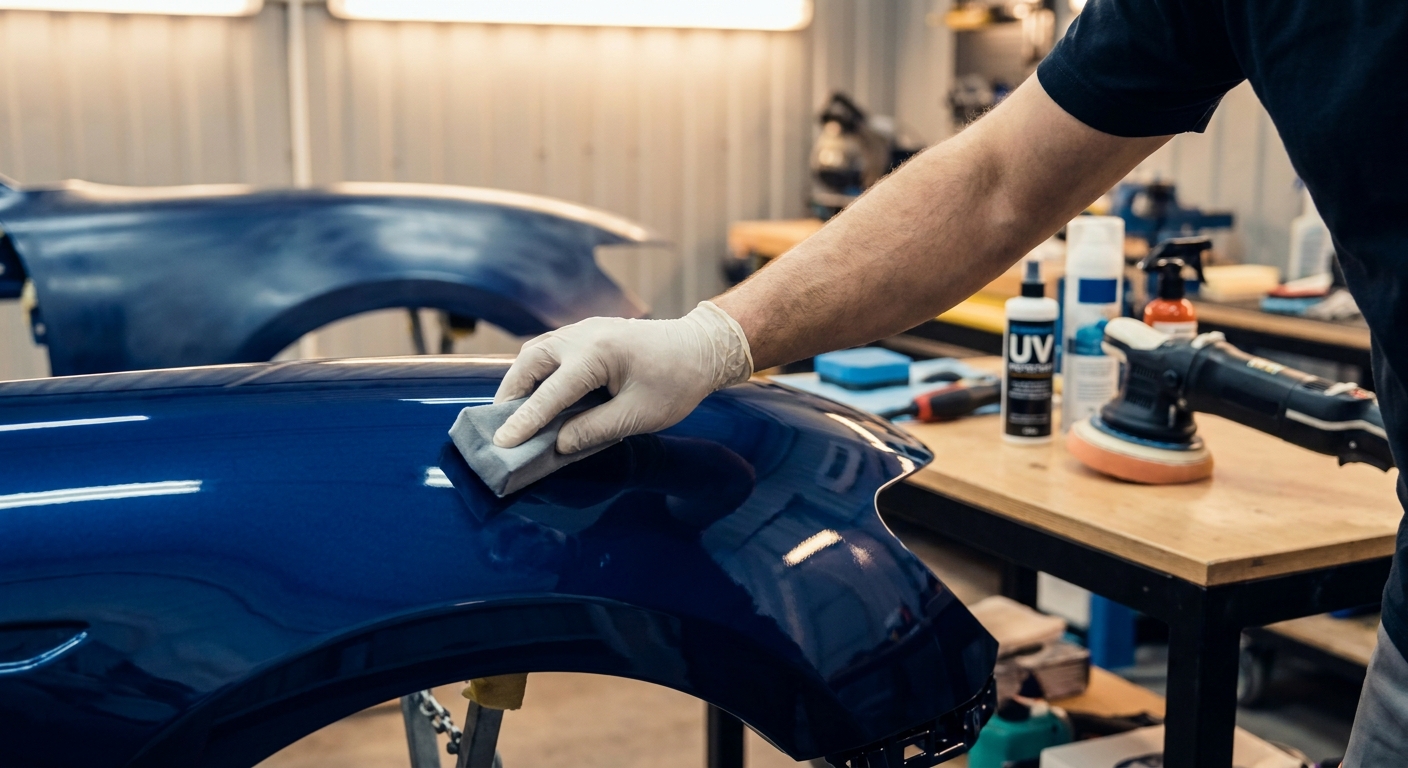
Prevent Paint Fade After Panel Beating (2026 Guide)
Fresh paint on a repaired panel can lose its shine within 12 to 18 months if the prep, product, and aftercare aren't right — and in Gauteng's UV load, that clock runs faster than most owners expect.
TL;DR: Paint fade after panel beating usually comes down to three failures — poor colour matching, cheap clear coat, or zero UV protection in the first 90 days. The fix is a proper colour match at the point of repair, a quality clear coat cure, and a maintenance routine that starts the week you collect the car. Panel beaters who get this right, like Metalcross Vehicle Makeover Clinic, will tell you upfront how they matched your colour and what to do for the first month. Skip the DIY touch-up pens on repaired panels in 2026 — they're the fastest route back to a mismatched, fading patch.
Why this matters
A repaired panel that fades faster than the rest of the car isn't just ugly — it tanks resale value and flags the vehicle as a prior repair to any buyer who looks closely. South African sun delivers UV index readings above 10 for large chunks of summer, and factory paint is engineered for that; budget aftermarket paint jobs often aren't.
The damage shows up slowly. A panel that looked identical on collection day can visibly shift in hue within six months if the clear coat wasn't catalysed properly or the base coat used a cheaper pigment blend. By the time you notice, the only fix is a redo — which costs more than doing it right the first time.
What you'll need
- A written record of the paint code and formula used (ask for this at colour matching in panel beating time, not after)
- A pH-neutral car shampoo, not dish soap or degreaser
- A UV-protective wax or ceramic sealant rated for at least six months
- A microfibre wash mitt and two-bucket wash setup
- Garage or shade cover access, even part-time
- 30 days of patience before any polishing or compounding on the new panel
The steps
1. Confirm the colour match before you leave the shop
This is the single biggest fade-prevention step and it happens before the car ever gets driven. Ask to see the panel in direct sunlight, not just under workshop lighting, because metallic and pearl finishes shift dramatically between the two. A shop using a proper spectrophotometer match will show you a formula printout, not a guess based on the paint code on the door jamb.
Common mistake: accepting a match that looks fine under fluorescent lights and only spotting the mismatch once you're home and the panel is next to the original paint in daylight.
2. Let the clear coat cure fully before washing
Fresh clear coat needs 30 days to fully cross-link and harden, even though it feels dry to the touch within 24 hours. Washing, waxing, or driving through automated car washes inside that window traps solvents in the finish and accelerates UV breakdown later.
Hand-wash only during the first month, using straight water if there's dust, and skip pressure washers on the new panel entirely. Expected outcome: a clear coat that reaches full hardness and resists chalking for years instead of months.
3. Apply a UV sealant within the first week after cure
Once the 30-day cure window closes, apply a UV-protective sealant or ceramic coating to the repaired panel and blend it into the surrounding original paint so there's no visible line. This step matters most on bonnets, roofs, and boot lids — the panels that take direct overhead sun for hours a day.
Common mistake: sealing only the repaired panel and leaving the rest of the car bare, which creates a visible gloss and fade-rate mismatch within a year.
4. Park smart for the first six months
UV exposure is cumulative, and the first six months after a repair are when new paint is most vulnerable to oxidation. Shade parking, even a carport or a tree, cuts direct UV load significantly compared with open-lot parking all day.
If shade isn't available, a breathable car cover for parking at work or home adds meaningful protection during the vulnerable window in 2026's summer heat.
5. Wash with the right products and technique
Dish soap and degreasers strip wax and sealant layers and leave the clear coat exposed to raw UV. Use a pH-neutral shampoo, a two-bucket method to avoid swirl marks, and a soft microfibre mitt every time.
Expected outcome: the repaired panel keeps its gloss and colour depth at the same rate as the rest of the bodywork, with no visible fade line by month twelve.
6. Reapply protection every three to four months
Carnauba wax lasts roughly six to eight weeks in South African sun; synthetic sealants stretch to three or four months; ceramic coatings can run 12 to 24 months depending on the product. Whatever you choose, put a reminder in your calendar and reapply on schedule rather than waiting until the fade is visible.
Common mistake: applying protection once after the repair and assuming it lasts the life of the car — it doesn't, and gaps in coverage are where fade starts.
7. Book a six-month check-up with the shop that did the repair
A reputable panel beater will look at the repaired panel at six months and flag early signs of clear coat haze or colour drift while it's still fixable with a polish rather than a repaint. This is also the point where warranty claims, if the shop offers one, typically need to be raised.
If you're unsure whether your original repair was done to a standard that will hold up, run it against the criteria in spot a quality panel beating job before assuming the paint itself is the problem.
Troubleshooting
- Panel looks noticeably lighter than the rest of the car within 3 months — this is almost always a colour match failure at application, not a fade issue. Go back to the shop; a correct match shouldn't drift this fast.
- Clear coat looks cloudy or hazy in direct sun — early sign of UV breakdown from an undercured or thin clear coat. A machine polish can often restore it if caught within the first year; leave it longer and you're looking at a respray.
- Fade only on the bonnet or roof, not the doors — expected pattern from UV exposure differences between horizontal and vertical panels. Prioritise sealant reapplication on horizontal surfaces every 8-10 weeks.
- White or chalky residue appearing on the repaired panel — oxidation from a wax that's worn through completely. Strip with a clay bar, then reapply protection immediately.
- Mismatch only visible at certain angles — a metallic or pearl flip issue from incorrect flake orientation during spray application. This is a redo situation, not a maintenance fix.
- Older vehicle repair fading faster than expected — original factory paint on cars over 10-15 years old is often already thin from decades of sun exposure, which changes how new paint bonds and cures. See car paint restoration for older vehicles for what to expect on an older shell.
Tools and resources
- Two-bucket wash kit with grit guards
- pH-neutral automotive shampoo
- UV sealant or ceramic coating rated for 6+ months
- Breathable car cover for outdoor parking
- Written colour match formula from your repair shop
- A shop that can walk you through how to spot a quality panel beating job if you're evaluating repair quality after the fact
What to do next
If the mismatch or fade is already visible and you're not sure whether it's a maintenance issue or a repair-quality issue, get a second opinion before spending money on products that won't fix a bad spray job. Compare what you're seeing against the standards Metalcross Vehicle Makeover Clinic outlines for a proper colour match, and don't accept "it'll blend in over time" as an answer — it won't, in 2026's UV conditions or any other year's.
FAQ
What's the best way to prevent paint fade after panel beating?
Get a verified colour match before the car leaves the shop, let the clear coat cure fully for 30 days, then apply UV sealant and reapply it every three to four months. These three habits address the causes responsible for most premature fade seen on repaired panels.
Is ceramic coating better than wax for a repaired panel?
Ceramic coating lasts 12-24 months versus 6-8 weeks for carnauba wax, making it the stronger long-term choice for UV protection. Wax is cheaper upfront but needs far more frequent reapplication to match ceramic's protection level.
How much does it cost to fix faded paint after a repair?
A machine polish to restore early-stage clear coat haze typically costs a fraction of a respray, but pricing depends on panel size and paint condition. Catching fade within the first year keeps you in polish territory rather than needing a full redo.
Can I use touch-up paint on a faded panel myself?
DIY touch-up pens rarely match factory or shop-applied paint exactly and often make a mismatch more visible rather than less. Leave blending work on repaired panels to a shop with proper colour-matching equipment.
How long does new panel paint take to fully cure?
Clear coat feels dry within 24 hours but needs roughly 30 days to fully cross-link and reach its hardest, most UV-resistant state. Avoid washing, waxing, or polishing the panel during that window.
Does parking in shade actually make a measurable difference?
Yes — cumulative UV exposure is the primary driver of clear coat breakdown, so consistent shade parking materially slows fade compared with all-day open-lot exposure. Even partial shade for a few hours a day adds up over a year.
Why does my repaired panel fade faster than the rest of the car?
Usually a colour or clear coat quality mismatch from the repair itself, not a maintenance problem you caused. If only one panel is fading and the rest of the car looks fine after the same wash routine, the repair is the likely cause.
Is a repaint necessary if the panel is already fading?
Not always — haze and mild fade caught within the first 12 months often responds to a machine polish and fresh sealant. Deep colour drift or clear coat that's cracking usually does need a redo.
One last thing
The most overlooked fade-prevention step isn't a product, it's timing: getting the panel evaluated at the 6-month mark, not when the fade is already obvious at 18 months. Shops that build that check-up into the repair process catch colour drift while a polish still fixes it — waiting until it's visible from the driveway usually means a respray instead.