
Car Scratch Repairs: Ultimate Guide to Gate and Garage Scrapes
Most drivers expect damage to happen out on the road: a stone flicked up on the highway, a loose trolley in a shopping centre car park, or a taxi cutting across lanes on William Nicol.
Yet many requests for car scratch repairs come from somewhere much closer to home, namely the driveway, the garage and the security gate. A misjudged turn past a gate post can leave long, uneven scratches along a door, bumper or sill. So can a garage built for a smaller car than the one you drive now, or an electric gate that starts closing before the car has fully cleared it.
These scrapes are frustrating partly because they feel avoidable, and partly because they tend to happen again. The same tight angle into the same garage catches the same panel week after week. In the estates and townhouse complexes of Douglasdale, Bryanston and the wider northern suburbs of Johannesburg, narrow driveways, boom gates and shared parking are part of daily life. Panel beaters see this kind of damage constantly.
This guide explains why home scrapes look the way they do and how to judge how serious the damage is. It also covers what a professional scratch repair involves and how to stop the same mark from coming back a month after it has been fixed.
Why Home Scrapes Are So Common in South African Suburbs
Security shapes the way most South African homes are designed. Motorised sliding gates, palisade fencing, brick gate pillars and boom-controlled estate entrances all add physical obstacles between the street and the garage. Many of the townhouse complexes around Douglasdale and Randburg were built when the average family car was a compact sedan. Today the same garages are expected to fit wide SUVs and double cab bakkies, which leaves very little room on either side.
Load shedding has added another factor. Gate motors that run on backup batteries can open slowly, stop halfway, or behave unpredictably when the battery is weak. Safety beams that stop a gate from closing on a vehicle can also fail when the power supply is unstable. Drivers who are already wary of waiting in the driveway after dark are more likely to edge through a gate that is not fully open, and that is exactly when a scrape happens.
None of this points to careless driving. It reflects the everyday conditions most northern Johannesburg drivers deal with, which is why home scrapes are such a regular part of small damage repair work.
What Driveway and Garage Damage Usually Looks Like
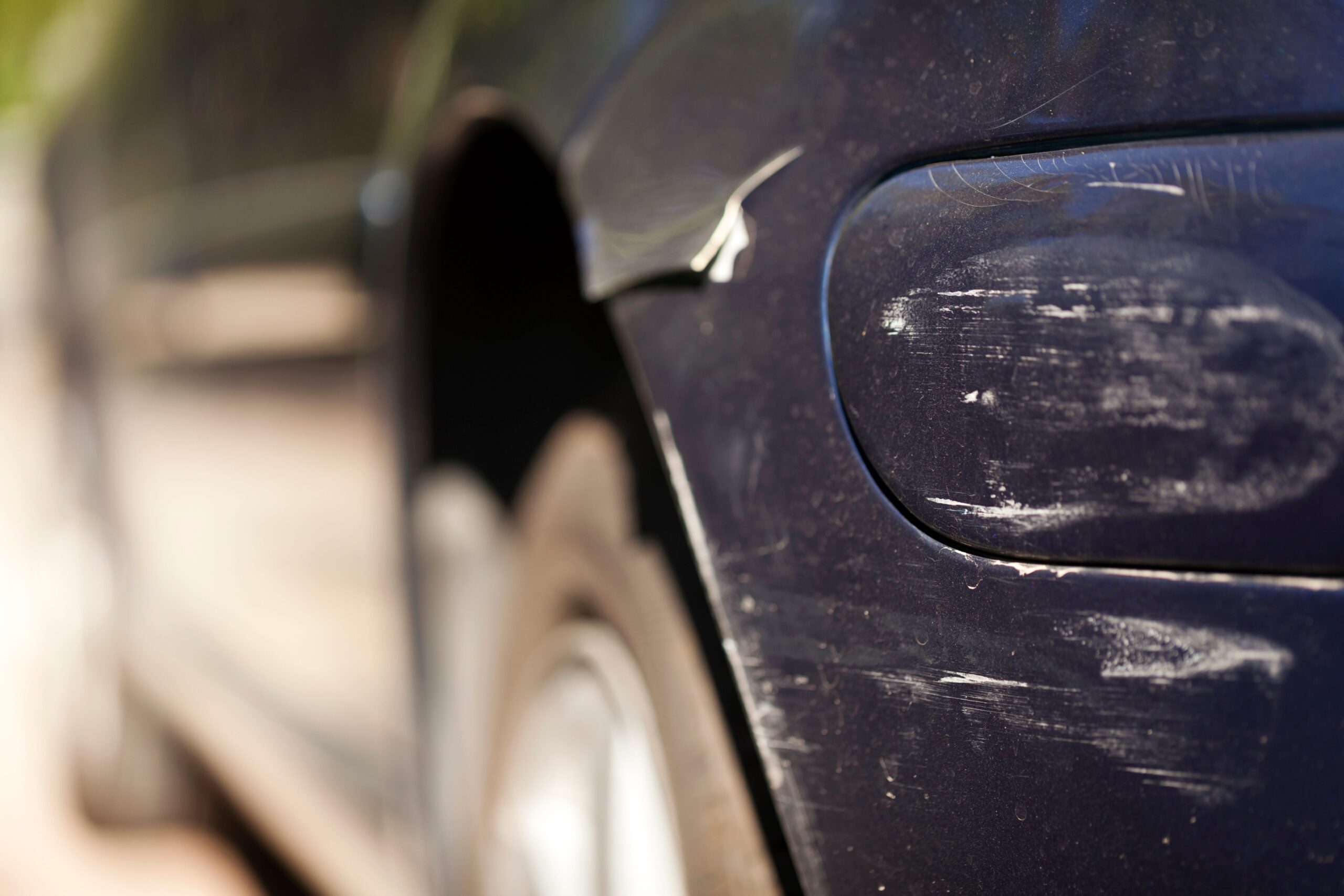
Home scrapes look different from typical road damage. They almost always happen at very low speed, so instead of a sharp impact you get a long, dragging contact mark. Gate posts and brick pillars tend to leave horizontal scratches running along a door or rear quarter panel, sometimes crossing from one panel onto the next. Garage walls usually catch bumper corners and side mirror housings. Kerbs and raised paving edges scrape the lower sills and the bottom edges of doors.
Paint transfer is also very common. If the wall or gate is painted, some of that paint often ends up on your car, leaving white, grey or green streaks on top of your own paintwork. An electric gate closing onto a vehicle is a slightly different case. Because the gate pushes against the panel, it can leave a shallow dent along with the scratches, usually on a rear door or rear quarter panel.
Knowing which type of damage you are dealing with is the first step in understanding what the repair will involve.
How to Tell How Deep the Scratches on Your Car Go
Automotive paint is built in layers. A primer bonds to the metal or plastic, a base coat carries the colour, and a clear coat on top provides gloss and protection. How deep a scratch goes through these layers determines how it needs to be repaired.
Start by gently washing the area with car shampoo and a soft microfibre cloth. Dust and paint transfer can make a scrape look far worse than it is. Then run a fingernail lightly across the mark. If your nail glides over it, the scratch is probably limited to the clear coat. If your nail catches, the scratch has likely gone into the base coat or deeper.
Look closely at the colour inside the scratch too. Grey or white showing through usually means the primer has been exposed, and a silver shine means bare metal. At that point the damage needs proper paint repair, not polishing. Avoid scrubbing hard or reaching for a DIY scratch remover on deeper marks, as abrasive products can spread the damage and leave a dull, hazy patch around it.
This matters most on the metal sills and lower door edges. Once bare metal is exposed there, moisture and grit collect easily, and Gauteng’s summer storm season can start corrosion surprisingly quickly.
What Professional Car Scratch Repairs Involve
A proper repair starts with a careful inspection under good lighting. The technician assesses how deep each scratch goes, whether there is any denting, and whether the damage crosses from one panel onto another.
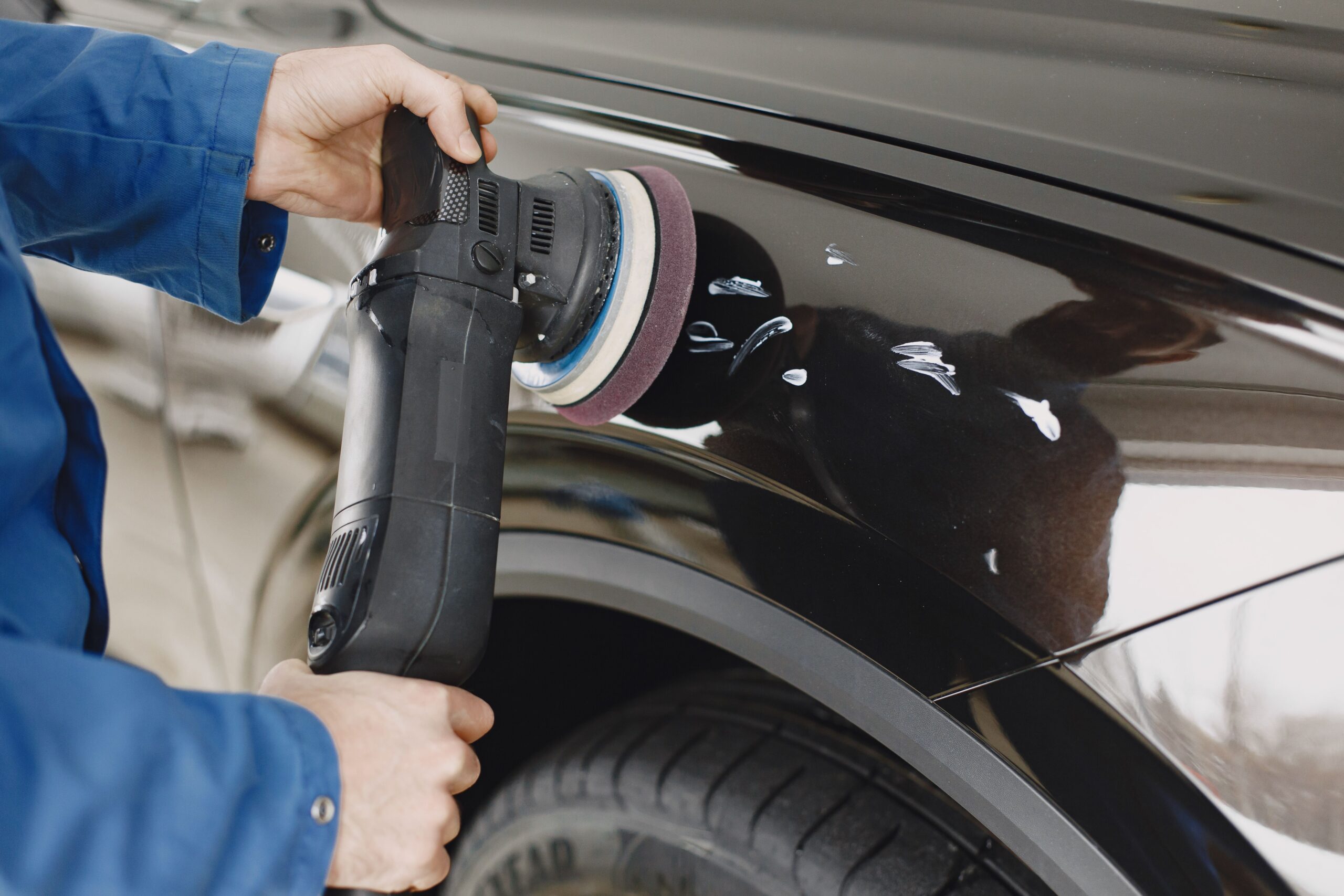
Light marks that sit only in the clear coat, including most paint transfer, can often be removed with machine polishing, which levels the surface and restores the gloss. Deeper scratches go through a fuller process. The damaged area is sanded smooth, and any gouges are filled and shaped. Primer, a colour-matched base coat and a fresh clear coat are then applied.
Driveway scrapes often run across a panel join, such as from a rear door onto the quarter panel. In those cases the new paint is usually blended into the neighbouring panel so the colour transition cannot be seen. This is especially important on metallic and pearl finishes, and on older vehicles where the existing paint has faded in the South African sun.
Plastic bumpers need their own approach. Bumper paint has to flex with the material, so the preparation and products used differ from those on metal panels. A bumper scrape that is repaired without accounting for this can crack or peel later.
At Metalcross, most small damage repair work like this falls within a 15-hour turnaround. It is backed by a two-year warranty on workmanship and a three-year warranty on paintwork.
Why Even a Minor Auto Scratch Is Worth Fixing
It is tempting to live with a driveway scrape, especially when you suspect it might happen again. There are good reasons not to leave it too long, though.
Scratches that reach bare metal on sills and lower doors are the most likely to rust. These areas collect water, mud and road grime, and rust that starts under the paint tends to spread before it becomes visible. Repeated scrapes on the same panel also add up. A panel that has been scraped three or four times needs a larger repair than one fixed after the first incident.
There is also resale value to consider. Long scratches along the side of a vehicle are among the first things a buyer or trade-in assessor notices, and they usually knock off more than the repair would have cost. For many drivers, a home scrape costs less to fix than their insurance excess, so paying for the repair directly is often the simpler route. An itemised quote makes that decision easy.
If you have been searching for panel beaters near me after a scrape at home, a quick assessment will tell you exactly which category your damage falls into.
Preventing the Same Scrape From Happening Again
Once the repair is done, a few small changes at home can stop it from happening again. Foam or rubber guards fitted to garage walls and gate pillars cushion any contact and are inexpensive to install. A tennis ball hanging from the garage ceiling, or a painted line on the driveway, gives you a consistent stopping point and a reference for lining up the car. Reflective strips on gate posts make them much easier to see at night.
Have your gate motor serviced regularly, with the battery and safety beams checked, particularly during periods of load shedding. Many installers can also lengthen the auto-close delay, which gives you more time to clear the gate before it starts closing. Where possible, wait for the gate to open fully before driving through, and fold your mirrors in tight garages. If your estate boom or shared driveway is a recurring problem, it is worth raising with the body corporate or estate management, as other residents are likely dealing with the same thing.
Get Your Driveway Scrapes Sorted at Metalcross in Fourways
Gate, garage and driveway scrapes are among the most common forms of vehicle damage in the northern suburbs, and they are rarely as serious as they first look. A professional assessment, the right repair method and a few small changes at home will keep your car looking the way it should.
Metalcross Vehicle Makeover Clinic in Fourways, Johannesburg, has over 40 years of experience in scratch repair, paint repair and small damage repair for drivers across Fourways, Douglasdale, Bryanston, Randburg and Sandton.
Visit www.metalcross.co.za to get a quote or reach out via our contact page today.
Frequently Asked Questions
Can a scratch from my gate or garage wall be polished out?
Sometimes. If the scratch sits only in the clear coat, or if most of the mark is paint transfer from the wall or gate, machine polishing can often remove it completely. If the scratch has gone through to the colour coat, primer or bare metal, it needs a proper paint repair. A quick professional assessment will tell you which applies to your car.
Is it worth claiming on insurance for a driveway scrape?
In many cases, no. Most home scrapes cost less to repair than a typical insurance excess, and claiming may affect your no-claim bonus. Getting an itemised quote first lets you compare the repair cost with your excess and make an informed decision.
How long do car scratch repairs take at Metalcross?
Most scratch and small damage repairs are completed within Metalcross’s 15-hour turnaround. Repairs that involve several panels or blending may take a little longer, and the team will give you a clear timeline when your vehicle is assessed.
My electric gate closed on my car. Could there be damage I cannot see?
Yes. A gate pressing against a panel can cause a shallow dent or affect how a door or panel sits, even when the scratches look minor. It is worth having the panel alignment checked along with the paintwork, and having your gate’s safety beams inspected so it does not happen again.