
Car Respray Cost: Full Respray vs Panel Respray Explained
You have decided your car’s paintwork needs attention, so you ask two or three workshops around Fourways for a quote. When the numbers come back, they are nowhere near each other. One looks surprisingly affordable, another seems far too high, and you are left wondering how the same job can be priced so differently.
In most cases, the answer is that it is not the same job at all. The word “respray” covers several very different levels of work, and the car respray cost you are quoted depends heavily on which level each workshop has in mind. Understanding what each option includes helps you compare quotes properly, ask the right questions, and choose the work your vehicle actually needs.
Why Car Respray Costs Vary
A respray is not simply a matter of spraying new colour over the old. The final result depends on how much of the vehicle is painted, how much preparation is done beforehand, and how many parts are removed rather than masked over. Two quotes can both say “respray” while one covers a single door and the other covers every visible surface of the car, including the areas you only see when a door is open.
In South Africa, the condition of the existing paint also plays a big role. Years of intense Highveld sun, summer hailstorms and dusty winters can leave paint faded, chalky or peeling. The more the existing finish has broken down, the more preparation is needed before new paint can be applied, and that preparation is a major part of any car respray cost.
The Panel Respray: Targeted and Practical
A panel respray focuses on one or more individual panels, such as a door, bonnet, wing or bumper. It is the most common type of respray and is usually chosen when damage or paint failure is limited to specific areas. A scraped door, a faded bonnet or a bumper repaired after a minor knock are typical examples.
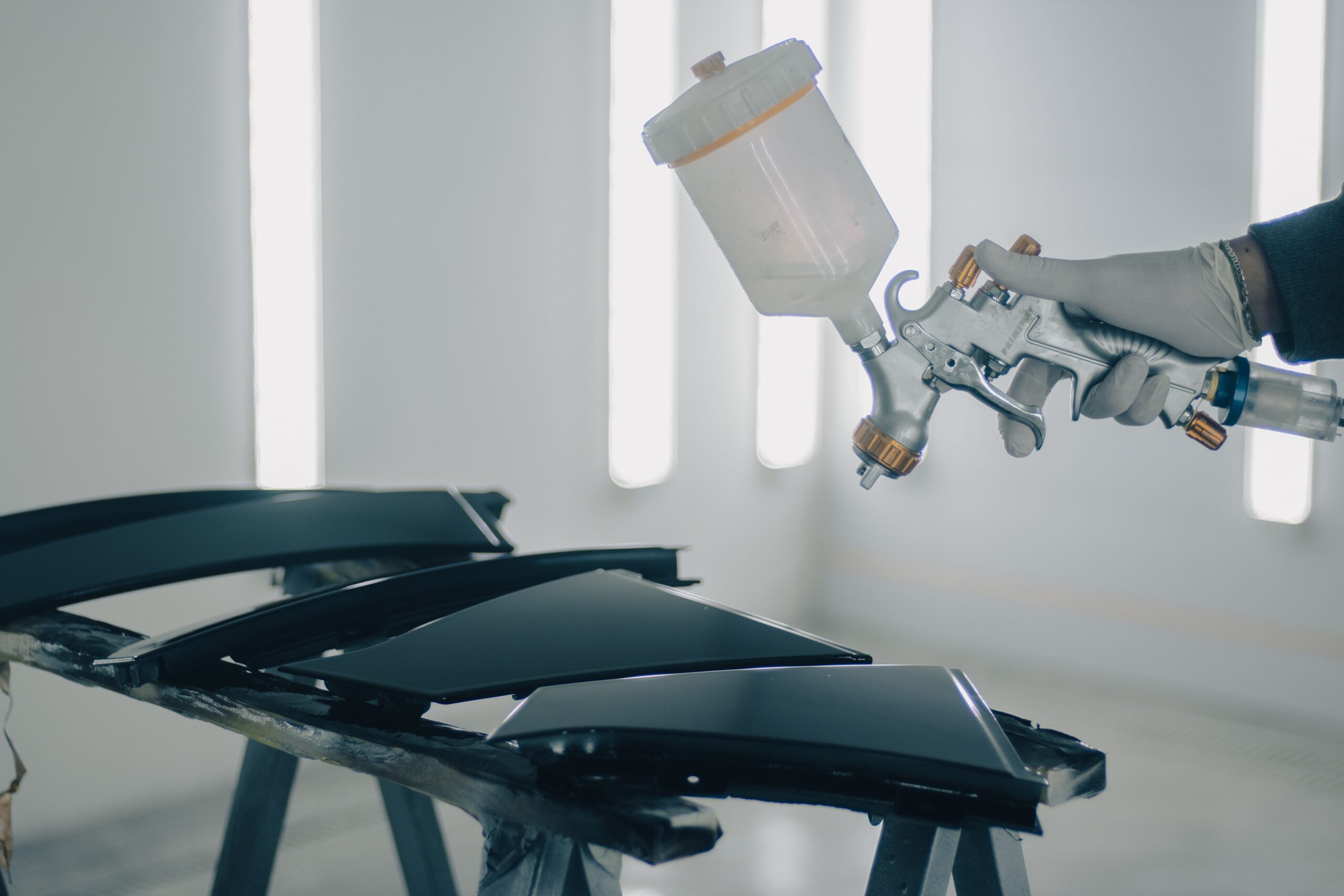
The work involves preparing the affected panel, repairing any surface damage, priming, applying a colour-matched base coat and finishing with clear coat. On most vehicles, the technician will also blend the new colour slightly into the neighbouring panels so the transition is not visible, especially on metallic and pearl finishes.
Because the work is contained, a panel respray is usually the most cost-effective option when the rest of the vehicle’s paint is in good condition. The main consideration is colour matching. If the surrounding paint has faded, the repaired panel needs to be carefully matched to the current colour rather than the original factory shade.
The Exterior Respray: A Fresh Look on the Outside
An exterior respray covers all the outer surfaces of the vehicle that you see when the doors, bonnet and boot are closed. It is often chosen when the paint across the whole car has faded, oxidised or developed widespread clear coat failure, but the owner is keeping the same colour.
This option gives the vehicle a consistent finish from front to back, which multiple panel resprays cannot always achieve on older paint. However, the door jambs, the area under the bonnet and the inside edges of the boot are usually left as they are. Since the colour stays the same, this rarely matters visually.
When comparing quotes for this type of work, check how much trim, lighting and hardware will be removed. Removing parts such as handles, lights and badges allows paint to reach every edge properly. Masking around them is quicker, but it can leave visible edges and lines where the new paint stops.
The Full Respray: Every Visible Surface
A full respray goes further and includes the door jambs, the inside of the bonnet and boot openings, and other areas that become visible when the vehicle is opened up. This is the most involved option and is typically chosen for colour changes, restoration projects, or vehicles where the paint has deteriorated badly throughout.
For a colour change in particular, a full respray is usually the only way to achieve a convincing result. Opening a door and seeing the old colour in the frame instantly gives the change away. Painting these areas requires extra removal, masking and preparation, which is why the car respray cost for a full respray is higher than for an exterior-only job.
What Else Affects Car Respray Cost
Beyond the scope of the work, several factors shape the final quote. Preparation is the biggest one. Sanding, treating stone chips, repairing small dents and addressing any rust all happen before painting begins. Skipping or rushing this stage is the most common reason a cheaper respray starts peeling or bubbling within a year or two.
The type of paint also matters. Solid colours are generally simpler to apply and match than metallic, pearl or special effect finishes, which need more careful application to look even from every angle.
Finally, the quality of materials makes a difference. Premium paint systems and clear coats hold up better under South African UV exposure than budget products, and the finish lasts longer as a result.
How to Compare Respray Quotes Properly
When you receive quotes, look past the total and check what each one actually includes. Ask whether the quote is for a panel, exterior or full respray, which parts will be removed rather than masked, how surface damage and rust will be handled, and whether blending into adjacent panels is included.
A clear, itemised quote makes this comparison far easier. If one quote is much lower than the others, it is worth asking what has been left out. Often the difference comes down to less preparation, fewer parts removed or lower-grade materials, all of which affect how long the finish lasts.
When Things Do Not Go Smoothly
Sometimes problems only appear once the old paint is removed. A panel that looked sound may reveal rust, old filler from a previous repair, or damage hidden under the surface. When this happens, a reputable workshop will stop, show you what was found, and explain the options before carrying on.
This is one reason a thorough assessment at the start matters. The more carefully the vehicle is inspected before work begins, the fewer surprises there are along the way, and the more accurately the quote reflects the real scope of the job.
Getting a Respray Quote in Fourways
For drivers in Fourways, Douglasdale, Bryanston, Randburg and Sandton, an in-person assessment is the most reliable way to understand your car respray cost. A technician can look at the condition of the existing paint, check for hidden damage, and advise whether a panel, exterior or full respray is the right choice for your vehicle and budget.
Metalcross Vehicle Makeover Clinic in Fourways has over 40 years of experience in paint restoration, resprays and colour changes across all vehicle makes and models. The team assesses each vehicle individually and recommends the level of work that makes sense, rather than defaulting to the biggest job.
Find the Right Respray for Your Car With Metalcross
The right respray depends on your vehicle’s condition, your plans for the car and the result you want. Knowing the difference between a panel, exterior and full respray puts you in a far better position to compare quotes and make a confident decision.
Metalcross Vehicle Makeover Clinic in Fourways, Johannesburg, offers assessments and clear, itemised quotes for panel resprays, full resprays and colour changes.
Visit www.metalcross.co.za to get a quote or reach out via our contact page today.
Frequently Asked Questions
Is a panel respray enough, or do I need a full respray?
If the damage or paint failure is limited to a few panels and the rest of the paint is in good condition, a panel respray is usually enough. If the paint has faded or failed across the whole vehicle, or you are changing colour, an exterior or full respray is the better option.
How can I get an accurate car respray cost for my vehicle?
The most accurate way is an in-person assessment. A technician can check the condition of your paint, look for hidden damage and recommend the right level of work. Metalcross provides clear, itemised quotes after assessing your vehicle.
Does the colour of my car affect the respray cost?
It can. Solid colours are generally simpler to apply and match, while metallic, pearl and special effect finishes need more careful application to look even from every angle.
How should I look after my car after a respray?
Fresh paint needs time to cure fully, so avoid automated carwashes and high-pressure washing for the first few weeks.Once the paint has cured, a quality wax, sealant or ceramic coating will help protect the finish from the South African sun.