
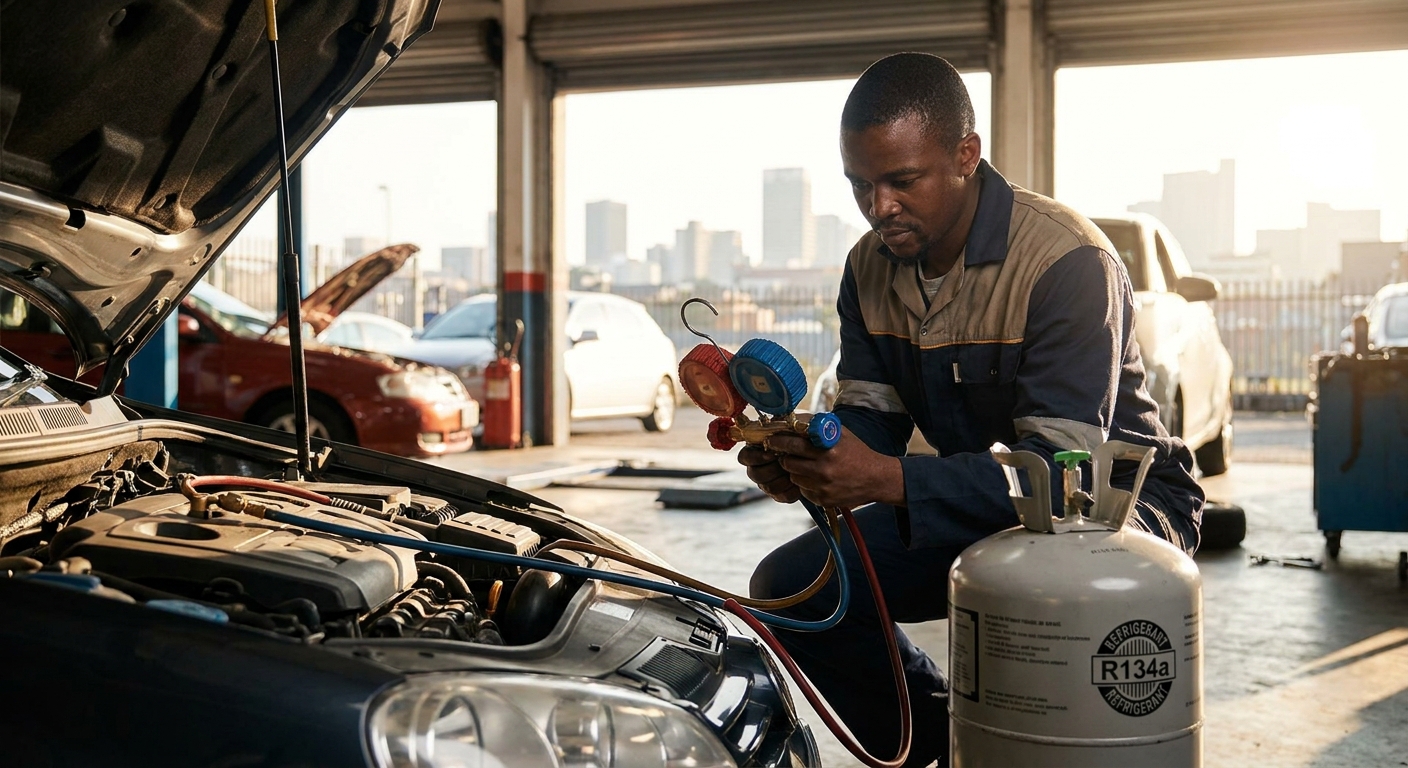
Aircon Regas Johannesburg: Signs You Need One (2026)
Weak airflow, warm air from the vents, or a musty smell on start-up usually means your air conditioning has lost refrigerant, not that the whole system has failed. This guide walks through the checks you can do yourself before booking an aircon regas in Johannesburg, and where collision damage fits into the picture.
- Warm air, weak airflow, or a hissing sound under the dash signals low refrigerant, not a broken compressor.
- Book an aircon regas Johannesburg workshop within 2026 if vents blow above 10 degrees C at idle.
- Refrigerant leaks 1kg or more a year on older systems even with no visible damage.
- A cracked condenser from bumper impact or hail is the most common hidden cause of slow leaks.
Why this matters
A car aircon system is sealed. Refrigerant does not get used up the way fuel does, so if the gas level has dropped, there is a leak somewhere in the system. Ignoring it means the compressor runs dry, seizes, and turns a R1,500-ish regas into a full compressor replacement.
Johannesburg's Highveld summers push cabin temperatures past 40 degrees C inside a parked car. A system running low on gas struggles harder in that heat, which accelerates wear on the compressor clutch and seals. Catching the drop early, before the compressor cycles constantly trying to compensate, is the difference between a cheap fix and an expensive one.
On many vehicles that come through Metalcross Vehicle Makeover Clinic, the AC problem traces back to a knock the owner barely remembers, not age or neglect.
What you'll need
- 15 minutes with the engine running and the aircon on max
- A cheap infrared thermometer or your hand at the centre vent
- A torch to check under the front bumper for staining or ice
- Your service history, if you have one, to check when the system was last regassed
- Access to a workshop that can pressure-test the system, not just top up gas
The steps
1. Start the car cold and time the cooldown
Run the engine, switch the aircon to max cold with the fan on high, and note how long it takes for the vents to feel genuinely cold. A healthy system drops noticeably within 60 to 90 seconds. If it takes longer than 3 minutes, or never gets properly cold, refrigerant is low. Common mistake: testing this in winter, when ambient ductwork temperature masks a weak system.
2. Check vent temperature with a thermometer
Hold an infrared thermometer or thermometer probe at the centre vent with the aircon on max for 5 minutes. A properly gassed system on a Johannesburg summer day should read 4 to 8 degrees C. Anything above 10 degrees C at idle points to a regas being overdue. Common mistake: judging temperature by feel alone — hands adapt fast and mask a 5-degree difference.
3. Listen for the compressor clutch cycling
With the aircon running, listen under the bonnet for a clicking or clunking sound every few seconds. That is the compressor clutch engaging and disengaging faster than normal because there is not enough refrigerant pressure to hold a steady cycle. A healthy system cycles slowly, roughly once every 10 to 15 seconds at idle. Common mistake: mistaking normal clutch engagement for a fault when it is actually cycling correctly.
4. Smell the airflow on first start-up
A musty or sour smell in the first 30 seconds of running the aircon usually means moisture and mould in the evaporator, not a refrigerant problem on its own — but low refrigerant lets moisture linger longer in the system, which makes the smell worse. If the smell fades after a minute, it is likely just condensation. If it persists, the evaporator needs attention alongside the regas.
5. Inspect the front bumper and condenser area
Shine a torch behind the front bumper, around where the condenser sits directly in the airflow path. Look for oily residue, dust that has stuck to a wet patch, or bent fins. This is the single most overlooked cause of a slow leak, because the condenser takes the first hit in any front-end knock, stone chip, or hail event. If you've had recent bumper repair for SUVs in Johannesburg or panel work up front, check this area first. Common mistake: assuming a car that looks fine cosmetically has an undamaged condenser — the fins bend on impacts too minor to dent the bumper skin.
6. Check for ice or frost on the low-pressure line
With the aircon running for 10 minutes, feel the larger of the two lines running into the firewall. A thin layer of frost is normal on a correctly gassed system. Solid ice buildup, or no cooling at all on that line, means the system is either critically low or blocked. Common mistake: touching the line with bare skin for too long — frost lines can cause minor cold burns, use a cloth.
7. Book a pressure test, not just a top-up
Any workshop that offers to just add gas without checking system pressure first is guessing. A proper regas includes evacuating old refrigerant, pulling a vacuum to test for leaks, and refilling to the manufacturer's exact spec — usually 500g to 900g depending on the model. If the pressure test shows a leak, filling it without fixing the leak means you are back in the same spot within 6 to 12 months.
Get a panel beating quote online
Check bumper or hail damage before it turns into a bigger aircon repair.
Troubleshooting
- Aircon blows cold for a few minutes then warms up: usually a compressor clutch struggling with low pressure. Regas first; if it still warms up, the clutch itself may need replacing.
- Aircon works fine at idle but warms up at highway speed: points to a condenser airflow problem, often a bent fin or debris buildup from a front impact.
- Aircon smells fine but takes forever to cool: low refrigerant charge without a major leak, common on systems that haven't been regassed in 2 to 3 years.
- AC light or dash warning appears intermittently: a pressure sensor is picking up a fault. Don't ignore it — it usually means the system has dropped below a safe operating threshold.
- Water pooling under the car after running the aircon: this is normal condensation drainage, not a leak. Refrigerant leaks leave an oily residue, not clear water.
- Aircon stopped working right after a bumper knock: get the condenser inspected before assuming it's coincidence. Physical damage to the condenser is the most common cause of a sudden, total AC failure after a collision, and it's often found during hail damage repair in Gauteng or bumper work.
Tools and resources
- Infrared thermometer for vent temperature checks
- Torch for inspecting the condenser behind the bumper
- A workshop or panel beater that checks for hidden AC line damage during collision repairs, not just cosmetic panels
- Choosing the right panel beater if a knock is the suspected cause
- Your car's manual, for the exact refrigerant type (R134a or R1234yf) and fill quantity
What to do next
If the checks above point to a regas, book it before the next heatwave, not during it — workshops in Johannesburg get backed up in October and November every year. If the checks point to physical damage on the front end instead, get that assessed first; regassing a system with a cracked condenser is money spent twice. Read how to spot a quality panel beating job before you pay before signing off on any repair that touches the front-end components near the AC system.
FAQ
How do I know if my car needs an aircon regas in Johannesburg?
Vents blowing warm or barely cool air, a compressor clicking rapidly, or ice on the low-pressure line all point to low refrigerant. A vent temperature above 10 degrees C at idle on max cold is the clearest sign in 2026.
How often should a car aircon be regassed?
Most systems need a regas every 2 to 3 years even without a leak, since a small amount of refrigerant escapes through hose fittings over time. Systems with a known leak need it sooner.
Can a bumper knock cause aircon problems?
Yes. The condenser sits directly behind the front bumper, so even a minor impact can bend fins or puncture a line, causing a slow refrigerant leak that shows up weeks later as warm air.
Is it normal for aircon to smell musty on start-up?
A brief musty smell in the first 30 seconds is usually condensation and mould in the evaporator, not a refrigerant issue. If it lasts longer than a minute, the evaporator likely needs cleaning alongside a regas.
What’s the difference between a regas and a full aircon service?
A regas evacuates and refills refrigerant to spec after a pressure test. A full service adds a leak check, evaporator cleaning, and sometimes cabin filter replacement on top of the regas.
Does hail damage affect car aircon systems?
Hail can crack or bend the condenser fins mounted at the front of the vehicle, since they sit exposed behind the grille and bumper. This is a common hidden cause of AC failure discovered during hail repair work.
How much refrigerant does a car aircon system hold?
Most passenger vehicles hold between 500g and 900g of refrigerant, depending on the model and system size. Overfilling or underfilling both reduce cooling performance and strain the compressor.
Can I just top up refrigerant myself with a canister?
You can, but a DIY top-up skips the pressure test that finds leaks, so the same problem returns within months. A proper regas at a workshop evacuates old gas and tests the system before refilling.
One last thing
The part most owners never check is the one that fails most often: the AC condenser sits exposed directly behind the front bumper, with no protection beyond a thin plastic grille. A stone chip, a low-speed parking bump, or a hailstorm can crack it without leaving a mark on the bumper skin itself, which is exactly why a car that never had any accidents can still need a regas every single year. If your AC keeps losing gas on a schedule, stop topping it up and get the condenser inspected during your next body inspection.
Related guides