
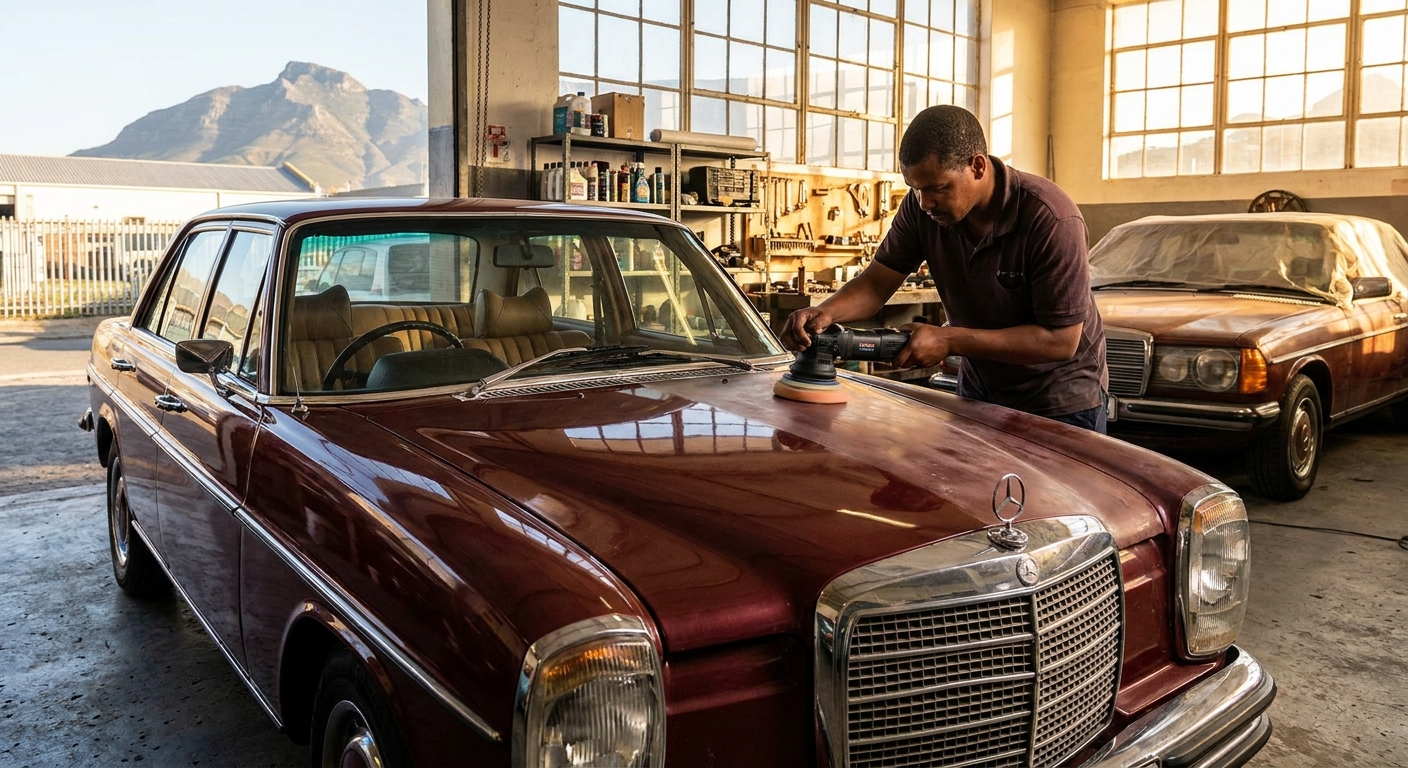
Car Paint Restoration for Older Cars in SA: 2026 Verdict
Paint on a vehicle built before 2015 fades, oxidises and chips in ways that new-car paint simply doesn't, and knowing when restoration beats a full respray (or a trade-in) saves thousands of rand. This guide breaks down what actually matters for older vehicles in South Africa's climate and traffic conditions.
TL;DR
Car paint restoration for older vehicles in South Africa works best when rust is caught early and colour-matching is done against the original code, not a generic tint chart. A full respray on a 12-year-old sedan with all-over oxidation typically beats a spot repair on cost-per-year value, while isolated fade or scratch damage on 2-3 panels is a Buy for spot correction. Metalcross Vehicle Makeover Clinic handles both routes, and the decision usually comes down to how many panels are affected and whether rust has already started bubbling under the clearcoat.
Why this matters
South Africa's UV index runs high for most of the year, and Highveld sun plus Gauteng hail cycles do more damage to a 10-year-old clearcoat than most owners realise. A car that looked fine in 2020 can show chalky, sun-bleached panels by 2026, and once oxidation breaks through the clearcoat, rust follows within months, not years.
The cost gap between catching this early and catching it late is not small. A single-panel respray runs a fraction of a full-vehicle job, but delayed rust treatment can turn a R3,000 panel fix into a R15,000-plus structural repair. That's the entire logic behind this guide.
Who this is for
This is for owners of vehicles 8 years or older in South Africa who are staring at faded paint, sun-bleached bonnets, rust spots along wheel arches or door sills, or mismatched patchwork from a previous repair, and trying to decide whether restoration makes financial sense against the car's current value. It's also for anyone comparing a full respray quote against trading the car in, or weighing an insurance claim against paying out of pocket.
What to look for in paint restoration for older vehicles
Rust assessment before any paint work
No paint job holds if rust is active underneath it. A proper restoration starts with sanding back to bare metal on affected panels to check how far corrosion has spread, not just what's visible on the surface. Skipping this step is the single biggest reason resprays fail within 18 months on older vehicles.
Colour-matching accuracy for discontinued codes
Vehicles older than 10-12 years often carry factory paint codes that have been discontinued or reformulated, so an exact match usually means custom mixing against a sample panel rather than pulling a code off a database. A shop that skips this step leaves you with a bonnet or door that's visibly a shade off in direct sun, which is worse than the fade you started with.
Panel count vs full respray threshold
If oxidation or fade covers more than 3-4 panels, spot repairs almost always cost more per panel and still leave visible blend lines. The threshold most panel beaters in South Africa work off is roughly 40% of visible surface area — past that, a full respray is usually the better spend.
Clearcoat UV protection suited to local conditions
Highveld sun and coastal humidity age clearcoat differently, so the finish applied in 2026 needs to suit where the car actually lives, not a generic spec sheet. A UV-stable clearcoat costs a bit more upfront but adds years before the next fade cycle starts.
Insurance vs out-of-pocket cost path
Hail damage, accident-related panel work, and some paint claims can run through insurance, while pure age-related fade almost never qualifies. Knowing which bucket your damage falls into before you request quotes changes the entire conversation with your insurer and the shop.
Turnaround time and courtesy vehicle availability
A full respray on an older vehicle realistically takes 5-10 working days once rust remediation is added in. If you need the car daily, confirm loan or courtesy vehicle availability before booking, not after the car is already stripped down.
Top picks for restoring paint on an older vehicle
The safe pick: spot panel respray for isolated fade or rust
This works when damage is contained to 2-3 panels — a bonnet, a door, a rear quarter panel. One spec that matters: panels are sanded to bare metal and rust-treated before primer, not just scuffed and resprayed over. Expect turnaround of 2-4 working days per panel cluster. Verdict: Buy if damage is localised and the rest of the paint still holds gloss.
The quote-comparison pick: get multiple quotes before committing
Before signing off on any respray, comparing panel beater quotes online shows you the spread between shops using like-for-like descriptions of the damage. Quotes for the same job can vary by more than 30% across Gauteng shops depending on paint brand and labour rates. Verdict: Buy — this step alone prevents most of the overpaying that happens on older-vehicle jobs.
The insurance-covered respray: when damage qualifies
If the paint damage traces back to hail, an accident, or a covered event, claiming insurance for panel beating repairs can cover most or all of the respray cost, subject to your excess. One number that matters: most insurers require quotes within 48-72 hours of the incident being logged. Verdict: Buy if the damage is claimable — don't pay cash for something your policy already covers.
The full respray: for all-over oxidation and multi-panel fade
When fade or chalking covers most of the vehicle's visible surface, spot work leaves obvious blend lines and doesn't hold value the same way. A full respray resets the car's appearance and, on a vehicle still worth running, extends usable life by years rather than months. Verdict: Consider — worth it if the car's resale or trade-in value still clears the respray cost by a reasonable margin; Skip if the vehicle is close to end-of-life mechanically.
The complementary fix: headlamp and trim restoration alongside paint
Faded, cloudy headlamps sit right next to freshly resprayed panels and make the whole job look unfinished if left untouched. Restoring or replacing lenses alongside a paint job is a small add-on that changes how the finished car reads at a glance. Verdict: Consider — cheap relative to the paint job itself, and it closes the gap between old and new-looking sections of the car.
What to avoid
- Bargain resprays under market rate for a full vehicle — corners get cut on prep, primer coats, and rust treatment, and the finish fails within a year.
- DIY touch-up pens on large panels — they work for stone chips, not for panel-wide fade, and they leave a visible texture mismatch under direct sun.
- Skipping rust treatment to save time — painting over active corrosion guarantees bubbling returns within 12-18 months, and the second fix costs more than doing it right the first time.
Verdict comparison
| Approach | Best for | Typical turnaround | Verdict |
|---|---|---|---|
| Spot panel respray | 2-3 panels, isolated fade/rust | 2-4 working days | Buy |
| Full respray | All-over oxidation, multi-panel fade | 5-10 working days | Consider |
| Insurance-covered respray | Hail/accident-related paint damage | Varies by insurer approval | Buy |
| DIY touch-up | Minor stone chips only | Same day | Skip for panel-wide damage |
FAQ
Is car paint restoration worth it for a 10-year-old vehicle in South Africa?
Yes, if the vehicle's resale or trade-in value still clears the respray cost with a reasonable margin and the mechanicals are sound. Restoration on a well-maintained older vehicle usually pays back in resale value and extends usable life by several years.
How much does a full respray cost in South Africa in 2026?
Costs vary widely by paint brand, panel count, and rust remediation needed, so getting comparative quotes matters more than any single average figure. Requesting quotes from multiple shops for the identical scope of work is the only reliable way to gauge fair pricing.
Can insurance cover paint restoration on an older car?
Only if the damage traces to a covered event like hail or an accident — age-related fade and oxidation are not claimable under standard motor policies. Confirm the cause of damage before deciding whether to claim or pay cash.
How do I know if my car needs a full respray or just spot repair?
If fade, oxidation, or rust covers more than roughly 40% of the visible panel area, a full respray usually costs less per panel than patchwork spot repairs. Under that threshold, spot repair on the affected panels is the more cost-effective route.
Does rust treatment need to happen before painting?
Always. Painting over active corrosion without sanding to bare metal and treating the rust means the problem resurfaces under the new paint within 12-18 months.
Will a respray on an old paint code actually match the rest of the car?
Only if the shop custom-mixes against a sample panel rather than pulling a generic factory code, since many pre-2015 codes have been discontinued or reformulated. Ask specifically how the shop handles colour-matching for older vehicles before booking.
How long does a full vehicle respray take?
Budget 5-10 working days for a full respray on an older vehicle once rust remediation is factored in, longer if extensive corrosion is found once panels are stripped.
Should I restore paint or just trade the car in?
Compare the respray quote against the trade-in value difference a fresh paint job would add — if the gap favours restoration and the vehicle is mechanically sound, restoration wins. If the car is near end-of-life mechanically, a trade-in usually makes more sense than sinking money into cosmetics.
One last thing
The detail most owners miss in 2026 is that Highveld UV exposure ages clearcoat faster than coastal humidity does, even though coastal cars corrode faster underneath. That means a Gauteng car with 10 years on the clock often shows worse surface fade than a coastal car of the same age, while the coastal car is more likely to be hiding rust you can't see yet. Ask any shop quoting your respray which of the two problems they're actually solving for.